DITRECHT FH UNDIP Holds International Seminar on Personal Data Protection Authority
UNDIP, Semarang (November 23) – The Diponegoro Cyber Law and Technology Research Center (DITRECHT), Faculty of Law, Universitas Diponegoro (UNDIP), held an international seminar on Monday, November 23, 2026.
The seminar was entitled “Quo Vadis Indonesia’s Personal Data Protection Institution: Assessing the Prospects for Establishing a Personal Data Protection Authority under Law Number 27 of 2022.”
The event took place at the Fiat Justisia Room, Prof. Samiadji Soerjotjaroko Building, Faculty of Law, UNDIP Tembalang Campus. It supported the university’s World Class University (WCU) program. The initiative focused on strengthening research, international collaboration, and legal policy development in response to digital transformation.
The seminar addressed the urgent need to establish a personal data protection authority in Indonesia. This is an important mandate under Law Number 27 of 2022 concerning Personal Data Protection (PDP Law).
The law provides a legal foundation for protecting data subjects’ rights. It also establishes obligations for personal data controllers and processors. However, its implementation requires an independent and accountable supervisory institution. This institution must have a clear mandate and authority to handle complaints and enforce administrative sanctions.
Dean of the Faculty of Law Highlights the Need for a Personal Data Protection Authority
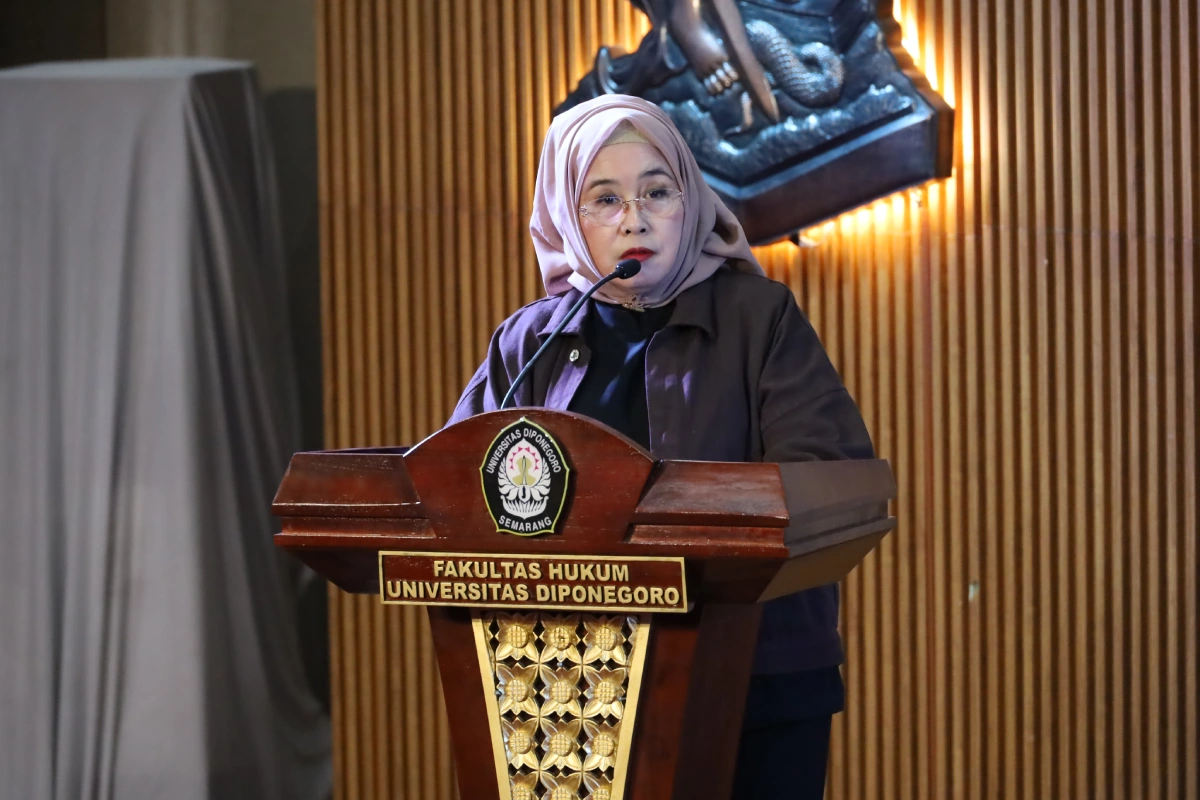
In her opening remarks, Dean of the Faculty of Law UNDIP, Prof. Dr. Retno Saraswati, S.H., M.Hum., emphasized the importance of the seminar’s theme for Indonesia’s future.
She hoped the seminar would examine the mandate, functional independence, and accountability of Indonesia’s personal data protection authority. The forum would also identify challenges in implementing Law Number 27 of 2022.
Furthermore, she encouraged participants to learn from Malaysia’s institutional experience. The discussion was expected to produce a collaborative matrix of key issues and policy options.
Prof. Retno also stressed the importance of protecting citizens’ personal data. She warned against the misuse of sensitive information by irresponsible parties.
According to her, Indonesia needs a dedicated institution to safeguard personal data. This is part of the state’s responsibility to protect its citizens and their rights. She hoped the seminar would provide valuable input and recommendations for policymakers.
Through this academic forum, DITRECHT FH UNDIP encouraged critical discussions on the ideal institutional framework for Indonesia’s personal data protection authority.
The discussions covered several key issues. These included supervision, examination procedures, complaint handling, remedies for data subjects, and coordination among institutions.
Indonesian and Malaysian Experts Discuss Personal Data Protection
The seminar featured several experts in law and personal data protection. They included Dr. Anggita Doramia Lumbanraja, S.H., M.H., a lecturer at UNDIP. She discussed institutional design and accountability in personal data protection.
Another speaker was Dr. Edmon Makarim, S.Kom., S.H., LL.M., Dean of the Faculty of Law, Universitas Indonesia. He examined the legal framework and implementation of the PDP Law.
The seminar also featured Prof. Dr. Nazura binti Abdul Manap from Universiti Kebangsaan Malaysia. She joined the event online and presented a comparative perspective on Malaysia’s personal data protection institutions.
The discussion was moderated by Dr. Gaza Carumna Iskadrenda and Teguh Arifiyadi.
Malaysia’s experience was an important part of the international discussion. Lessons from other countries could help Indonesia develop an appropriate institutional framework. The authority must align with Indonesia’s constitutional system, administrative needs, and law enforcement practices.
Participatory Workshop Develops Policy Recommendations
The event consisted of two complementary sessions: an international seminar and a participatory workshop.
The seminar provided a conceptual foundation and comparative institutional perspectives. Meanwhile, the workshop focused on identifying implementation challenges. It also aimed to develop practical policy recommendations.
The workshop involved representatives from 16 universities, local government representatives, DITRECHT members, and the facilitation team.
Participants were divided into four discussion groups. Each group examined a specific topic:
- Institutional mandates, independence, and accountability.
- Supervision, examination, and administrative enforcement.
- Complaint handling and access to remedies for data subjects.
- Inter-institutional coordination, regional implementation, and international cooperation.
Each group mapped key issues, legal foundations, implementation barriers, policy options, and follow-up actions. The groups then presented their findings in a plenary session. This process aimed to validate the results and agree on initial recommendations.
DITRECHT FH UNDIP expects several strategic outcomes from the event. These include an initial recommendation matrix and policy recommendations on strengthening personal data protection institutions.
Other expected outputs include proceedings or event minutes, two academic manuscripts, and follow-up international cooperation initiatives.
The international seminar reaffirmed UNDIP’s commitment to advancing knowledge and legal policy in the digital transformation era.
Through collaboration among academics, practitioners, government representatives, and international partners, UNDIP aims to support stronger personal data protection governance. The expected framework should be independent and accountable. It should also provide legal certainty and effective protection for the public.